mancrush

Thursday, October 13th, 2011

Definition:

1. When a straight man has a “crush” on another man, not sexual but kind of idolizing him. Many straight men end up having man crushes on Johnny Depp (I don’t blame them).

2. A man who has a crush on another man without sexual attraction.

“Hey, Ted. I heard you spent the night over at Dave’s.” “Yeah, we played twister and scrabble and watched movies, and spent all night talking, bizzatch.” “Dude, you’re 35, acting like you’re 12, and you’re using his language. You’ve got a man crush.”

3. For a man to have a very close platonic friendship and/or admiration for another man.

“Ben Affleck has had a man crush on Matt Damon for a long time.”

Synopsis:

Playing with the metro-sexuality of the modern male, two guys competitively argue about which of them is “best mates” with their mutual friend, Dave.

Written by Matt Wheeler and Directed by Tony Hagger

Posted by azf |

Chopping Off Heads (Is Wrong)

Thursday, October 13th, 2011

A Monty Python-style Spanish Inquisition period comedy about an executioner facing a mid-life crisis.

In this world, executioners are celebrities and our hero, Angel, is the best damn executioner in this town. The only problem is he’s the one guy who doesn’t want to be an executioner. It’s just not what he wants to do with his life…

‘Chopping off Heads’ was awarded guaranteed full MEDIA Single Project Development Funding.

Posted by azf |

Mancrush

Thursday, October 13th, 2011

The development of a TV comedy series born out of our short film.

Posted by azf |

It’s Not All Glee For Musical Dramas

Thursday, September 8th, 2011

The Indian film industry is full of them. They were once a staple of Hollywood. Now television is trying to embrace the musical drama. With the phenomenal success of Fox’s Glee, and the imminent arrival of the Spielberg-NBC drama, Smash, TV networks are making a concerted effort to succeed with a genre that has traditionally been a ratings challenge.
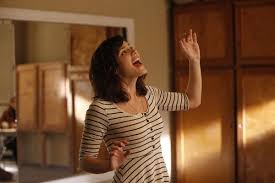
Now when I refer to musical dramas, I mean solely scripted series where the characters break out into song, either naturally (e.g. a character sings on stage), or unnaturally (e.g. a character sings in a police precinct). What I’m not referring to are the spate of reality competition series, where music clearly is one of the most popular sub-genres. This piece isn’t about X-FactorThe Voice or Idol, it is purely about dramas and comedy-dramas that are musicals.

In the past year, I have been asked on a few occasions by US network and production company execs whether there are any decent international musical dramas for them to snap up the format rights to. This led me to think that there is clearly a growing demand among the creative community to develop hit musicals. However, there are very few examples of successful musical dramas, either in the US or internationally.

Over the last 20 or so years, Before Glee, (or as ‘Gleeks’ would call it, B.G.), there had been several attempts in the US to launch successful musicals. There was Stephen Bochco’s infamous Cop Rock, CBS’s Viva Laughlin (based on the UK musical drama Viva Blackpool), to name but two. Both were ratings disasters.Viva Laughlin was in fact canceled after just two episodes. Even the UK original, Blackpool, which aired on BBC1, had very ordinary audience figures, falling between four and five million viewers – well below the timeslot average for that channel. So why is it that musicals generally struggle on TV?

Television certainly requires a greater sense of realism than cinema. You don’t find the same levels of fantasy, adventure and other pure escapist fare on mainstream TV – most of the highly successful series are grounded in reality. One could argue that the reason the first season of Heroes compared better than subsequent seasons was that it stayed in a world that viewers recognized, whereas later seasons became more typical fantasy, which alienated non-fantasy viewers of that series.

When characters start singing, viewers instantly recognize this as a world that isn’t the one they inhabit. This lowers their suspension of disbelief, a key requirement for any drama to sustain itself – especially over multiple weeks and years. New original songs written for the series also reduce the level of familiarity, as do old Broadway numbers, because they aren’t songs most viewers instantly recognize. And then there’s creating a story archetype that satisfies the target demo’s preferences. A show about cops isn’t necessarily appealing to the core tastes of audiences that like musicals.

What Glee does so well is literally overcome all these problems. It uses modern songs that viewers do not feel are dated. (Some of them are in fact exceptionally current). They take a universal situation – the struggles of sexuality and popularity in high school – and ground it in a reality that is the glee club, something that actually exists in American high schools. The problems that the main ensemble of characters face are issues that are easily identifiable, especially to the types of viewers that are potentially attracted to musicals.

These may seem obvious elements to have in any musical drama, but you’ll be surprised how many have (and will) fall short.

We know from the reality competition shows that viewers love to see people sing, but in a drama they need the right context to care about these characters (as none are likely to be competing for a record contract!). If you dig into the library of musical dramas, you’ll notice the odd series that addresses this, e.g. Dennis Potter’s Lipstick on your Collar, which at its heart was about a bored foreign officer worker (played by Ewan McGregor) desperately wanting some fun and excitement to his life as the Brits had handed over global affairs to the Americans, and he had nothing to do at work. This was, however, still niche. Glee has turned the genre into a huge mainstream affair.

For US network execs, the goal it appears has been to find another gem in this arena. However, they will need to be aware of the pitfalls that this genre poses for mainstream audiences – as not all musicals have the characteristics of Glee.

Lipstick on your Collar is profiled in TheirTV, currently in beta phase, our free resource and blog covering trends in international content.


Posted by azf |

Time for Foreign Dramas on US Screens

Friday, June 24th, 2011

DirecTV are doing something interesting with their entertainment channel. On 1st June, they rebranded their ‘101’ channel and it is now called the Audience Network. Its purpose is to show high quality dramas, but from a diverse range of sources. This might sound like the mission of many other networks, but when you dig deeper, the story with DirecTV is slightly different.

For those who don’t know, DirecTV is a satellite subscription service in the U.S. that has previously had little reputation for airing its own content, unlike say Sky in the U.K. However, as Comcast’s deal with NBC-Universal has shown, platform owners and content owners are merging. The 19.2 million subscribers to DirecTV have always had access to the ‘101’ channel, but DirecTV had previously done very little with it. Now that has changed.

However, rather than create and invest in brand new original dramas, DirecTV has noticed some canceled U.S. series retain a core, loyal audience base. Hence, they have taken on Damages and Friday Night Lights, which were initially on FX and NBC respectively, but didn’t secure enough viewing figures to justify those networks recommissioning the series. The Audience Network has also cleverly acquired second window rights to The Wire (which is otherwise only available to HBO subscribers). The diverse source of their dramas doesn’t stop there, though, as they have recently delved in to the international marketplace. They acquired U.S. rights to Australian critical darlings, Underbelly and Rake, as well as Canadian series Call Me Fitz and British series No Heroics and Mutual Friends.

Aussie sensation ‘Underbelly’


Apart from UK series airing on BBC America and PBS, the U.S. is not known for showing non-US product. Yet DirecTV has seen this as an opportunity rather than a risk.

One of the major trends over the past few years in U.S. broadcasting has been how small cable channels are investing heavily in original content. The fact that AMC, the 27th largest channel in terms of audience share in America, airs one of the most proclaimed series of recent times in Mad Men is testament to this. Yet DirecTV have decided with their Audience Network channel to buck that trend and invest in acquisitions.

It strikes me that other U.S. networks could follow suit here.

There are so many well produced dramas being commissioned all over the world (this will be the topic of a separate blog, but consider South Africa’s Zero Tolerance and Mexico’s El Equipo) that there is bound to be an audience for this type of content in the U.S. Of course, it is likely to be niche, but the majority of cable and premium cable channels have niche audiences – their aim isn’t breadth, rather it is to maximize the value out of their target audience by satisfying their specific viewing demands. Foreign content could easily do this.

Even though some may argue that television is primarily a domestic form, it is undeniable that for a particular segment of the viewing population, nationality is less relevant. It is why, for instance, non-English language films have performed better in the U.S. box office in the past decade. From Crouching Tiger, Hidden Dragon(which made $128.1m at the U.S. box office) down to the tiny Monsoon Wedding, which was shot on super 16mm and was made reportedly for $1.5m (and earned $13.9m just in U.S. cinemas), American audiences are increasingly appreciating non-US content.

We’ve started to see some signs of this in the U.K. where BBC4 have aired the Danish version of The Killingand back in 2008 also aired French crime drama Spiral. But in the U.S. this has yet to happen for anything other than English language content. (Obviously this doesn’t include Spanish-language series, which airs on channels aimed at the Hispanic diaspora). Given that the season finale of the U.S. version of The Killinggarnered a decent 2.3m viewers last Sunday night on AMC, there must for instance be some demand for seeing Forbrydelsen (the Danish original).

So as channels try to find an extra edge in this highly competitive market, how long will it be before we start to see subtitled series on U.S. television?


Posted by azf |

A Tale of Two Series

Tuesday, May 17th, 2011

Today was the first day of Up Fronts in New York. For those who are unaware, this is when the major US networks present their Fall schedules to the advertising community.

NBC and Fox both announced their respective schedules today. Two interesting things to emerge, particularly from a UK perspective, was how high Fox’s expectations seem to be of “The X Factor” and how a failed UK comedy, “Free Agents”, has managed to find its US adaptation on NBC’s much-vaulted new schedule.

An Unhappy Outing on C4


Let’s firstly look at Fox, who have slightly less time to fill than their competitors (as their 10pm slot goes to News). Whilst they have gone for some heavyweight titles in sci-fi epic “Terra Nova” (about a futuristic family who go back in time 150 million years to correct the damage done to Earth and save the world) and JJ Abrams’ action-drama “Alcatraz”, the centerpiece of Fox’s presentation was the much-hyped “The X Factor”.

On one level, this makes a lot of sense. The original UK format entered its seventh season in 2010 backed by a continuous rise in ratings every year. This culminated in the highest rated telecast of 2010, where “The X Factor” finale results edition attracted 17.7m viewers, beating even England’s World Cup game against Germany.

The UK has embraced the format for a long time, recognizing its more sophisticated nuances when compared to the “Idol” format, which does not have judges competing against each other. With “American Idol” ranked the number one show in the U.S. since 2005, it would seem only natural for its successor to take over the mantle.

However, “The X Factor” in the U.S. faces a number of challenges that may not seem obvious at first glance. Simon Cowell it has been proven was not the sole reason viewers were attracted to Idol. This season, the show has performed excellently without the judge who was once deemed irreplaceable. The brand of Idol it seems has usurped the brand of Cowell.

The other key element is NBC’s “The Voice”. In its freshman season, the show managed to rank number 3 in 18-49’s for the week ending 8th May. This puts it ahead of “Glee” and “Modern Family”, and only behind the two editions of “American Idol”. “The Voice” may have a different hook to “The X Factor”, but it takes some of the best elements of that format and effectively evolves it. The consequence of all this could be that come September, Simon Cowell’s return may not roar as the ratings monster Fox are hoping. Of course, it is likely to get well sampled, but if it ends up as a middling performer, not nearing the levels of “American Idol”, will that be perceived as a failure?

Flop on C4

“Free Agents” originally aired in the UK on Channel 4 in February and March of 2009. Its final episode garnered a lackluster 0.7 million viewers, which was roughly 52% of the timeslot average. By any measure, this is a failure, as evidenced by no re-commission. This awkward romantic comedy, about a recently divorced and homeless talent agent who thinks his colleague is his soul mate, will be airing on Wednesdays at 8.30pm right before the Kathy Bates legal drama, “Harry’s Law”.

Like all US comedies, it will need to find a way to sustain itself beyond the six episodes it aired in the UK. Naturally, NBC recognizes what it requires to make such adaptations work – proven by the long-term success of “The Office”.

But given that this series failed to work in its home market, if it does succeed in the US, it could well be unprecedented. Very few reformatted dramas and comedies succeed in the U.S., and of the ones that do all had significant acclaim in their domestic market. Success for “Free Agents” could alter the way shows are sold into the U.S.

Take note international producers in possession of shows that have flopped: you can always have a second chance in America!


Posted by azf |

TV is not the new Film

Tuesday, April 5th, 2011

In the current pilot season, there is a noticeable trend that a whole spate of well known movie stars are being cast for TV series. There was a time when it was only the big screen that had stars and the small screen which made stars. Nobody knew who Jennifer Aniston was before “Friends”, nor did the public know who George Clooney was before “E.R.”. And even recently, Katherine Heigl pre-“Grey’s Anatomy” was a relative unknown, while Steve Carrell before “The Office” had only appeared as a side-show in Jon Stewart’s “Daily Show”. Now, of course, Carrell is regarded as something of an A-list comedy film star.

So why is it that network execs are seeing an increasing need to cast established movie names such as Amanda Peet, Liz Hurley or even Kevin Spacey in the current crop of pilots?

Liz Hurley Wonder Woman

The primary reason must be the hope that ratings will rise because of these household names. However, there is very little evidence to suggest that movie stars in TV series can consistently improve a show’s chances of success. Sure, it may help improve the sampling of the opening episode, as it piques viewers’ interest – but in the long run, over the course of an entire season, audiences return to their favorite dramas and comedies because of the characters that interest them – not the star involved.

The attachment we form is with the narrative and the characters we’re engaged with, which is why a group of unknowns in a well constructed drama have a better chance of succeeding than a movie star led ensemble in an averagely written series.

Another reason for star attachments is that it may help the series get ordered in a competitive pilot season where some high profile pilots won’t even make it to series. Producers it seems feel their shows have a better chance of getting the nod if they manage to secure a big name. But if that’s the case, why not simply get that movie star to be another producer on the project?

Often the problem with a big-name star driving a new series is that everything is rewritten and reconceived for that actor. This ends up with a show that was far from the original vision of the creators.

So when looking to find the new “Lost” or “Grey’s Anatomy”, network execs might do well to think about casting less well known actors. TV is not the new film.


Posted by azf |

ZigZag

Wednesday, March 31st, 2010

The incredible ‘true’ tale of Eddie Chapman, Agent ZIGZAG, one of the most important (and sensational) British double agents of the Second World War — in his own words, honestly.


Posted by azf |
‹ Previous Page